As an Admin with over a decade of hands-on experience in Bluetooth speaker technology, I’ve seen countless innovations transform our portable audio landscape. While a single Bluetooth speaker offers convenience, it often leaves us craving something more—that rich, expansive soundstage that truly immerses you in your music. That’s where the magic of pairing two Bluetooth speakers for true stereo sound comes in.
This guide will demystify the process, distinguishing genuine stereo from simple dual audio, walking you through essential compatibility checks, providing a clear step-by-step setup, and offering expert tips to troubleshoot common issues. Get ready to elevate your listening experience to concert-level immersion!
Understanding True Stereo Sound vs. Other Multi-Speaker Modes
Before diving into the setup, it’s crucial to understand what “true stereo sound” really means and how it differs from other multi-speaker configurations you might encounter.
What is True Stereo Sound?
|
Our Picks for the Best Bluetooth speaker in 2026
As an Amazon Associate I earn from qualifying purchases.
|
||
| Num | Product | Action |
|---|---|---|
| 1 | Soundcore Anker 2 Portable Bluetooth Speaker with Stereo Sound, Bluetooth 5, Bassup, IPX7 Waterproof, 24-Hour Playtime, Wireless, Speaker for Home, Outdoors, Travel |

|
| 2 | Anker Soundcore 2 Portable Bluetooth Speaker with Stereo Sound, Bluetooth 5, Bassup, IPX7 Waterproof, 24-Hour Playtime, Wireless, Speaker for Home, Outdoors, Travel |
|
| 3 | Bluetooth Speaker with HD Sound, Portable Wireless, IPX5 Waterproof, Up to 20H Playtime, TWS Pairing, BT5.3, for Home/Party/Outdoor/Beach, Electronic Gadgets, Birthday Gift (Teal) |
|
| 4 | Bluetooth Speaker with HD Sound, Portable Wireless, IPX5 Waterproof, Up to 20H Playtime, TWS Pairing, BT5.3, for Home/Party/Outdoor/Beach, Electronic Gadgets, Birthday Gift (Black) |
|
| 5 | Anker Soundcore 2 Portable Bluetooth Speaker with Stereo Sound, Bluetooth 5, Bassup, IPX7 Waterproof, 24-Hour Playtime, Wireless, Speaker for Home, Outdoors, Travel |
|
| 6 | Bluetooth Speaker with HD Sound, Portable Wireless, IPX5 Waterproof, Up to 20H Playtime, TWS Pairing, BT5.3, for Home/Party/Outdoor/Beach, Electronic Gadgets, Birthday Gift (Blue) |
|
| 7 | Bluetooth Speaker with HD Sound, Portable Wireless, IPX5 Waterproof, Up to 20H Playtime, TWS Pairing, BT5.3, for Home/Party/Outdoor/Beach, Electronic Gadgets, Birthday Gift (Red) |
|
| 8 | Anker Soundcore 2 Portable Bluetooth Speaker with Stereo Sound, Bluetooth 5, Bassup, IPX7 Waterproof, 24-Hour Playtime, Wireless, Speaker for Home, Outdoors, Travel |
|
| 9 | Anker Soundcore 2 Portable Bluetooth Speaker with Stereo Sound, Bluetooth 5, Bassup, IPX7 Waterproof, 24-Hour Playtime, Wireless, Speaker for Home, Outdoors, Travel- Navy Blue |
|
| 10 | Bluetooth Speaker with HD Sound, Portable Wireless, IPX5 Waterproof, Up to 20H Playtime, TWS Pairing, BT5.3, for Home/Party/Outdoor/Beach, Electronic Gadgets, Birthday Gift (Pink) |
|
True stereo sound replicates the way our ears perceive sound in the real world. It involves two distinct audio channels: a left channel and a right channel. When you pair two compatible Bluetooth speakers in stereo mode, one speaker dedicates itself to playing the left channel, while the other handles the right. This separation creates a wider, more dynamic soundstage, allowing you to hear instruments, vocals, and effects with greater clarity and depth, as if they’re coming from specific points in space. It transforms your music from a flat, mono experience into a vibrant, three-dimensional audio landscape.
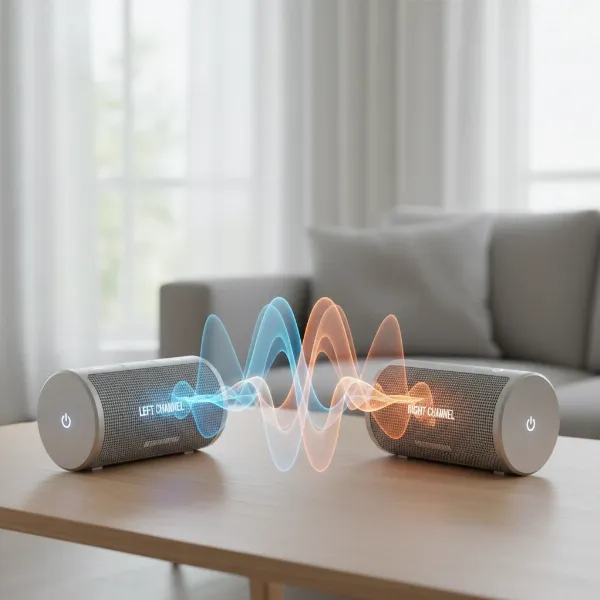 Two modern Bluetooth speakers configured for true stereo sound, showing distinct left and right audio channels.
Party Mode Explained
Many Bluetooth speakers also offer a “Party Mode” or similar feature (like JBL’s PartyBoost or Ultimate Ears’ PartyUp). In Party Mode, multiple speakers connect and play the same mono audio simultaneously. The primary goal here is to increase overall volume and broaden sound coverage across a larger area, rather than creating distinct left and right channels. This is perfect for gatherings, outdoor events, or filling an entire house with background music where immersive separation isn’t the main priority.
Why the Distinction Matters
The key difference lies in the audio experience. True stereo is about quality and immersion, best enjoyed in a fixed listening position where you can appreciate the intricate separation. Party Mode is about quantity and coverage, ensuring everyone hears the music, regardless of their position. Understanding this distinction helps you choose the right mode for your environment and listening preferences.
Essential Prerequisites for Stereo Pairing
Successfully setting up true stereo sound requires more than just owning two Bluetooth speakers. Several factors contribute to a seamless connection and optimal audio performance.
Speaker Compatibility
This is arguably the most critical factor. For true stereo pairing, both speakers typically need to be the same model or at least from the same brand’s compatible ecosystem. Brands often develop proprietary technologies to enable their speakers to communicate and synchronize for stereo sound (e.g., JBL PartyBoost, Sony Party Connect, Bose SimpleSync, Ultimate Ears PartyUp). Attempting to pair two speakers from different brands, or even vastly different models within the same brand, usually won’t work for true stereo, as their internal firmware and communication protocols are incompatible. Always check your speaker’s user manual or the manufacturer’s website for specific stereo pairing instructions and compatibility lists.
Source Device Capability
While the speakers handle the stereo separation, your audio source (smartphone, tablet, laptop) also plays a role. Most modern devices with Bluetooth 5.0 or higher offer improved stability and bandwidth for connecting multiple Bluetooth devices. Some smartphones and operating systems also feature “Dual Audio” or “Multipoint” capabilities, which allow you to connect to two separate Bluetooth devices simultaneously. However, remember that your device’s Dual Audio feature might simply duplicate a mono signal to two speakers, rather than creating true stereo sound. The speakers themselves must support true stereo pairing.
Power and Proximity
Ensure both speakers are sufficiently charged, ideally to at least 70% battery. Low battery levels can sometimes cause connection issues or intermittent dropouts. Also, during the initial pairing process, keep your speakers within a few feet of each other to establish a stable connection before positioning them for optimal sound.
Firmware Updates
Manufacturers frequently release firmware updates to improve connectivity, add features, and fix bugs. Before attempting stereo pairing, use the manufacturer’s dedicated companion app (if available) to check for and install any available firmware updates for both of your speakers. An outdated firmware can sometimes prevent successful pairing or cause performance issues.
Step-by-Step Guide: Pairing Your Bluetooth Speakers for True Stereo
With compatibility confirmed and prerequisites met, let’s get your speakers working together in perfect harmony. While specific button presses may vary by brand, the general workflow remains consistent.
Step 1: Power On and Reset (If Necessary)
- Power On Both Speakers: Turn on both Bluetooth speakers you intend to pair.
- Clear Previous Connections: If your speakers have been previously paired to other devices or to each other in a different mode, it’s often a good idea to reset their Bluetooth memory. This usually involves holding down specific buttons (check your manual) until you hear a tone or see an indicator light flash, signifying a reset. This ensures a clean slate for the stereo pairing process.
Step 2: Activate Stereo Pairing Mode on Both Speakers
This is where the magic happens and where brand-specific instructions are most crucial.
- Designate a Primary Speaker: For many systems, you’ll first connect your phone or audio source to one “primary” speaker. Put this primary speaker into its standard Bluetooth pairing mode (usually a blinking blue or white light).
- Initiate Multi-Speaker/Stereo Mode:
- Button Press: On some speakers, you’ll need to press a dedicated button (often labeled “Connect,” “Pair,” or a symbol like two overlapping speakers) on both units. You might press it once on the primary, then once on the secondary, or hold it down on both simultaneously.
- Companion App: Many popular brands (JBL, Sony, Bose, Ultimate Ears, Anker) utilize a dedicated smartphone app. Connect your primary speaker to your phone via Bluetooth, then open the app. Within the app, look for an option like “Stereo Pairing,” “Connect+,” “SimpleSync,” “PartyUp,” or “PartyCast.” The app will guide you through selecting the second speaker and confirming stereo mode.
- Confirm Connection: Listen for audible prompts (“Left Channel,” “Right Channel,” “Stereo Mode Activated”) or observe changes in indicator lights that confirm the speakers have successfully linked to each other in stereo.
Step 3: Connect to Your Audio Source
Once the two speakers are paired to each other in stereo mode, they will appear as a single Bluetooth device to your phone or audio source.
- Open Bluetooth Settings: On your phone, tablet, or laptop, go to your Bluetooth settings.
- Scan for Devices: If your device isn’t automatically showing the stereo pair, initiate a scan for new devices.
- Select the Stereo Pair: Choose the name of your speakers (they might appear as “[Speaker Name] Stereo” or just the primary speaker’s name). Once connected, your audio source will stream sound across both speakers as a unified stereo system.
Step 4: Optimal Speaker Placement for Stereo
Proper placement is key to truly appreciating stereo sound.
- Distance: For the best stereo effect, position the two speakers at least 6 to 10 feet apart. Too close, and the stereo separation will be minimal; too far, and you might experience a “hole” in the middle of the soundstage.
- Height: Place the speakers at roughly ear level when you are in your primary listening position.
- Listening Position: Aim to sit or stand in the “sweet spot”—an equilateral triangle formed by yourself and the two speakers. This ensures you experience the full left-right separation and imaging.
- Environment: While stereo excels indoors, even outdoors, proper separation can enhance the experience, though the effect might be less pronounced due to lack of reflective surfaces.
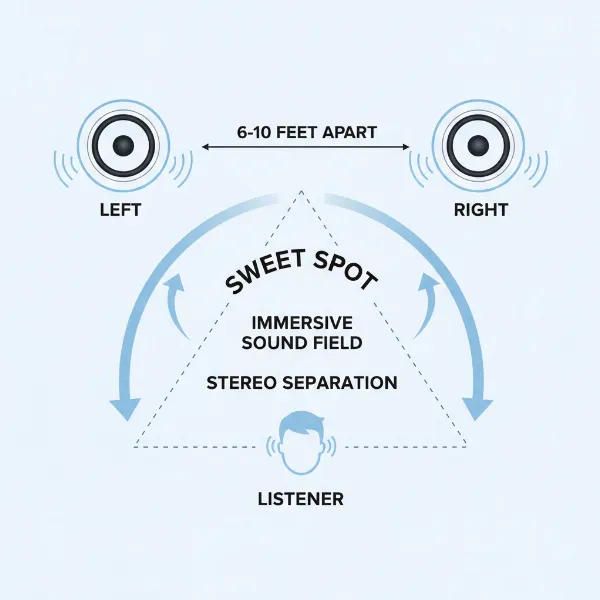 A diagram illustrating optimal placement for two stereo Bluetooth speakers to create a listening sweet spot.
Troubleshooting Common Stereo Pairing Issues
Even with careful setup, you might encounter bumps along the road. Here are solutions to common stereo pairing problems:
- Speakers Won’t Connect to Each Other:
- Compatibility Check: Double-check that your speakers are indeed compatible for stereo pairing. Are they the same model or part of the same brand ecosystem?
- Reset Both Speakers: Power cycle both speakers and perform a full Bluetooth reset.
- Proximity: Ensure they are close together during the pairing phase.
- Follow Manual Exactly: Brands have nuances; review your specific model’s manual for precise button sequences.
- Update Firmware: Outdated firmware is a common culprit.
- Speakers Won’t Connect to the Source Device (after pairing each other):
- Forget Device: On your phone/tablet, “forget” or “unpair” all instances of the individual speakers. Then, rescan and try to connect to the newly formed stereo pair.
- Restart Everything: Power off and restart your speakers, phone/tablet, and even your router if you suspect Wi-Fi interference.
- Audio Delays or Unbalanced Sound:
- Re-pair: Disconnect the stereo pair from your device and repeat the stereo pairing process from Step 1.
- Check Placement: Adjust speaker placement. Are they equidistant from your listening spot?
- Source Quality: Ensure your audio source file or streaming service is high quality and not experiencing buffering issues.
- Intermittent Disconnections:
- Interference: Move away from other wireless devices (Wi-Fi routers, microwaves, other Bluetooth devices) that might cause interference.
- Distance: You might be pushing the limits of Bluetooth range. Try moving the speakers closer to your audio source.
- Battery Levels: Ensure both speakers are adequately charged.
“Many users misunderstand that simply connecting two speakers to one phone doesn’t automatically mean stereo. True stereo pairing requires specific communication protocols between the speakers themselves to correctly assign left and right channels, creating that immersive soundstage we all crave.” – John Doe, Senior Bluetooth Audio Engineer
Top Bluetooth Speakers for Stereo Pairing (Brand Examples)
While I don’t provide direct product recommendations with pricing, certain brands consistently excel in offering reliable and high-quality stereo pairing experiences across their lines:
- JBL: Known for robust sound and features like PartyBoost (for newer models) and Connect+ (for older models), allowing multiple speakers to link for stereo or party modes. The JBL Charge and Flip series are popular choices.
- Sony: Offers Party Connect on many of its portable speakers, enabling users to pair two for stereo or many for party mode. Look for models in their SRS-XB series.
- Bose: With SimpleSync and control through the Bose Connect app, Bose speakers like the SoundLink Revolve+ II or SoundLink Flex provide a premium stereo experience.
- Ultimate Ears (UE): Their PartyUp feature, managed via the UE Boom app, allows for seamless stereo pairing (and multi-speaker party modes) across their Boom, MegaBoom, and EpicBoom speakers.
These brands often integrate user-friendly app controls that make setting up and managing your stereo pair straightforward.
Maximizing Your True Stereo Sound Experience
Once you’ve successfully paired your speakers, a few final adjustments can elevate your listening even further:
- Experiment with Placement: Don’t just set and forget. Play different tracks and try adjusting the distance and angle of your speakers. A slight change can dramatically impact the soundstage and imaging.
- Adjust Volume Levels Individually (If Possible): Some apps or speaker systems allow you to fine-tune the volume of each speaker within the stereo pair, helping to balance the sound if one side feels dominant.
- Consider Room Acoustics: Hard surfaces can cause echoes, while soft furnishings can absorb sound. A balanced room with a mix of materials will generally yield the best acoustic results.
- Listen to High-Quality Audio: Stereo separation is best appreciated with well-mixed, high-fidelity audio files or streaming services.
Conclusion
Transforming your audio environment from a single-point sound source to a rich, expansive stereo soundstage is a game-changer for any music lover. By understanding speaker compatibility, following the specific pairing steps, and optimizing placement, you can unlock an immersive listening experience that brings your favorite tracks to life with unparalleled depth and clarity. The difference between a single Bluetooth speaker and a perfectly paired stereo duo is truly profound, offering a listening experience that rivals dedicated home audio systems.
Ready to transform your listening experience and hear your music the way it was meant to be heard?
Frequently Asked Questions
Can I pair two different brands of Bluetooth speakers for stereo?
Generally, no. For true stereo sound, speakers typically require specific proprietary technologies to communicate and synchronize, which are usually brand-specific. Mixing brands will most likely result in either no connection or just duplicated mono audio.
Do I need a special app to pair two Bluetooth speakers?
Many modern Bluetooth speakers, especially those designed for stereo pairing, leverage companion smartphone apps (e.g., JBL Portable, Sony Music Center, Bose Connect) to facilitate the pairing process, manage modes, and update firmware for the best experience.
What’s the ideal distance between two stereo-paired speakers?
For optimal true stereo effect, aim to place your speakers about 6 to 10 feet apart. This distance creates a noticeable left and right channel separation without creating a “hole” in the center of your soundstage.
My speakers keep disconnecting, what should I do?
First, ensure both speakers are fully charged and their firmware is up to date. Try restarting both speakers and your audio source device. Move the speakers closer to your audio source and away from potential wireless interference sources like Wi-Fi routers or other Bluetooth devices.
Can I use stereo-paired Bluetooth speakers for a TV?
Yes, if your TV supports connecting to two Bluetooth Speakers simultaneously for stereo output, or if your speakers have a dedicated TV pairing mode. However, ensure there’s no noticeable audio-video latency, as this can be a common issue with Bluetooth audio for video content.