Imagine this: the sun is shining, the water is inviting, and your favorite tunes are drifting across the pool, perfectly in sync with your relaxation or party vibe. The dream of seamless music by the water is no longer a splashy fantasy thanks to the innovation of floating Bluetooth speakers. As an expert who has spent over a decade testing, evaluating, and repairing countless Bluetooth speakers, I understand the critical role sound plays in setting the mood, especially when it comes to aquatic adventures. Whether you’re hosting an epic pool party, unwinding with a solo swim, or simply enjoying a laid-back day by the water, selecting the right floating Bluetooth speaker is paramount. This comprehensive guide will navigate you through the best options available, ensuring you find a speaker that not only withstands the water but also delivers exceptional audio quality and enhances every moment of your pool days.
Popular Types of Floating Bluetooth Speakers
Floating Bluetooth speakers come in various designs, each catering to different preferences and scenarios. Understanding these types can help you pinpoint the perfect device for your aquatic audio needs.
Portable Floating Speakers
These are typically compact, lightweight, and designed for maximum mobility. Their main advantage lies in their ease of transport, making them ideal for quick dips, smaller pools, or when you want to easily move your music from the patio to the water. They often feature robust carrying straps or carabiners.
- Pros: Highly portable, often budget-friendly, good for personal use or small gatherings.
- Cons: Generally lower volume output, less powerful bass compared to larger models, shorter battery life on some basic units.
- Key Features to Look For: Excellent IPX7 or IP67 waterproof ratings, compact design, decent battery life (8-12 hours).
- Examples: Ultimate Ears Wonderboom series, Anker Soundcore Select models.
|
Our Picks for the Best Bluetooth speaker in 2026
As an Amazon Associate I earn from qualifying purchases.
|
||
| Num | Product | Action |
|---|---|---|
| 1 | Anker Soundcore 2 Portable Bluetooth Speaker with Stereo Sound, Bluetooth 5, Bassup, IPX7 Waterproof, 24-Hour Playtime, Wireless, Speaker for Home, Outdoors, Travel |

|
| 2 | Anker Soundcore 2 Portable Bluetooth Speaker with Stereo Sound, Bluetooth 5, Bassup, IPX7 Waterproof, 24-Hour Playtime, Wireless, Speaker for Home, Outdoors, Travel |
|
| 3 | Bluetooth Speaker with HD Sound, Portable Wireless, IPX5 Waterproof, Up to 20H Playtime, TWS Pairing, BT5.3, for Home/Party/Outdoor/Beach, Electronic Gadgets, Birthday Gift (Pink) |
|
| 4 | Bluetooth Speaker with HD Sound, Portable Wireless, IPX5 Waterproof, Up to 20H Playtime, TWS Pairing, BT5.3, for Home/Party/Outdoor/Beach, Electronic Gadgets, Birthday Gift (Red) |
|
| 5 | Anker Soundcore 2 Portable Bluetooth Speaker with Stereo Sound, Bluetooth 5, Bassup, IPX7 Waterproof, 24-Hour Playtime, Wireless, Speaker for Home, Outdoors, Travel |
|
| 6 | Bluetooth Speaker with HD Sound, Portable Wireless, IPX5 Waterproof, Up to 20H Playtime, TWS Pairing, BT5.3, for Home/Party/Outdoor/Beach, Electronic Gadgets, Birthday Gift (Black) |
|
| 7 | Anker Soundcore 2 Portable Bluetooth Speaker with Stereo Sound, Bluetooth 5, Bassup, IPX7 Waterproof, 24-Hour Playtime, Wireless, Speaker for Home, Outdoors, Travel- Navy Blue |
|
| 8 | Soundcore Anker 2 Portable Bluetooth Speaker with Stereo Sound, Bluetooth 5, Bassup, IPX7 Waterproof, 24-Hour Playtime, Wireless, Speaker for Home, Outdoors, Travel |
|
| 9 | Bluetooth Speaker with HD Sound, Portable Wireless, IPX5 Waterproof, Up to 20H Playtime, TWS Pairing, BT5.3, for Home/Party/Outdoor/Beach, Electronic Gadgets, Birthday Gift (Blue) |
|
| 10 | Bluetooth Speaker with HD Sound, Portable Wireless, IPX5 Waterproof, Up to 20H Playtime, TWS Pairing, BT5.3, for Home/Party/Outdoor/Beach, Electronic Gadgets, Birthday Gift (Teal) |
|
Performance-Oriented Floating Speakers
For those who prioritize powerful sound and robust features, performance-oriented floating speakers are the go-to. These models boast higher wattage, delivering richer bass and clearer audio that can fill larger outdoor spaces or overcome ambient noise at a lively pool party. Many offer 360-degree sound, ensuring everyone gets a great listening experience.
- Pros: Superior sound quality, deep bass, higher volume, often support multi-speaker pairing for stereo sound.
- Cons: Can be larger and heavier, often come with a higher price tag.
- Key Features to Look For: High wattage output, advanced audio technologies (e.g., BassUp), 360-degree sound, PartyBoost or similar multi-speaker pairing features.
- Examples: JBL Boombox series, Bose SoundLink Max, Ultimate Ears Megaboom/Epicboom.
Floating Speakers with Extra Features
Beyond just sound and waterproofing, some floating speakers incorporate additional functionalities to elevate your poolside experience. These can range from dynamic LED light shows that sync with your music to built-in microphones for hands-free calling.
- Pros: Enhanced ambiance, added convenience, unique aesthetics.
- Cons: These extra features can sometimes increase the price or impact battery life.
- Key Features to Look For: LED light effects, built-in microphone, app control for customization (EQ, light modes), FM radio.
- Examples: ION Audio Aquaboom X, iLive Waterproof Floating Bluetooth Speaker.
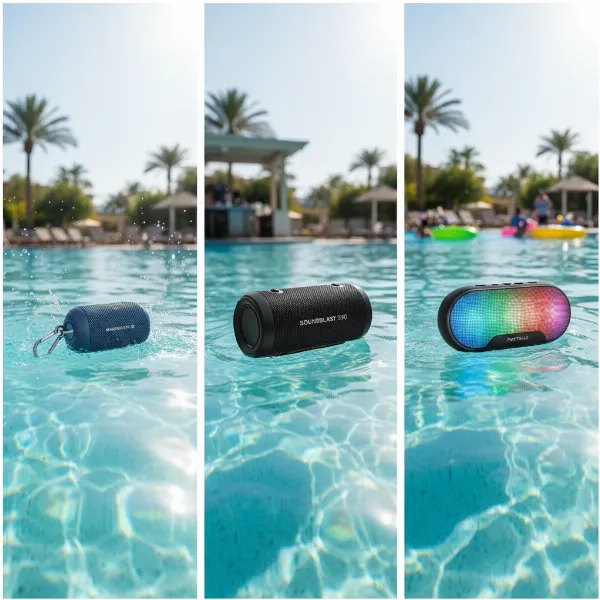 Three different floating Bluetooth speakers, illustrating portable, performance, and extra-feature types.
Essential Buying Guide for Floating Bluetooth Speakers
Choosing the ideal floating Bluetooth speaker requires a careful assessment of several factors. Here’s what to consider to make an informed decision.
Determine Your Usage Needs
Before diving into specifications, think about how and where you’ll use your speaker.
- Primary Use: Are you looking for background music for a relaxing swim, or a powerful sound system for a lively pool party? Do you plan to take it kayaking or to the beach frequently?
- Budget: Floating speakers range widely in price. Establishing a budget early will help narrow down your options.
- Required Features: Do you need extreme portability, or is booming bass your top priority? Do light shows matter, or is pure sound enough?
Key Factors to Consider
Waterproof and Dustproof Rating (IP Rating)
The Ingress Protection (IP) rating is crucial for any speaker intended for water use. It indicates how well a device is protected against solids (dust) and liquids (water). For floating speakers, you should look for specific ratings:
- IPX7: This means the speaker can be submerged in water up to 1 meter (3 feet) deep for 30 minutes without damage. This is the minimum recommended for floating speakers.
- IP67 or IP68: These ratings offer superior protection. The ‘6’ indicates complete dust-tightness, while ‘7’ or ‘8’ signifies excellent waterproofing, allowing for submersion. IPX8 protects against immersion beyond 1 meter for extended periods.
“For true peace of mind by the pool, always aim for a speaker with an IPX7, IP67, or IP68 rating. Anything less might not survive an accidental dip.” – Sarah Chen, Senior Audio Engineer at SoundWave Tech.
Remember, while a high IP rating ensures water resistance, repeated exposure to chlorinated or saltwater can degrade seals over time. Always rinse your speaker with fresh water after such exposure.
Floatation Design and Stability
Not all “waterproof” speakers float, and not all floating speakers float well. A good floating speaker should:
- Stay Upright: The speaker drivers should face upwards or outwards when floating to ensure optimal sound dispersion. Some cheaper models might flip upside down.
- Be Buoyant: It should easily stay on the surface of the water, not partially submerge, unless it’s designed to do so for specific sound effects.
Sound Quality
Even in water, sound quality matters. Consider:
- Clarity and Detail: Can you hear vocals and instruments clearly?
- Bass Response: For pool parties, a speaker with deep, impactful bass can make a huge difference. Look for terms like “thundering bass” or “BassUp™️ technology.”
- 360-Degree Sound: Many floating speakers offer omnidirectional sound, which is excellent for distributing music evenly around a pool area.
- Volume Output: Ensure it’s loud enough to be heard over splashes, conversations, and open-air environments.
Battery Life
Long pool days require long-lasting power.
- Look for speakers offering at least 10-12 hours of playtime. Many premium models now offer 20-40 hours.
- Consider charging time and whether it supports fast charging.
Durability and Build Materials
Beyond waterproofing, the overall build quality is important for outdoor use.
- Rugged Construction: Silicone, rubberized finishes, and sturdy plastic can withstand bumps and drops.
- Saltwater Resistance: If you plan on taking it to the beach, some speakers offer enhanced saltwater resistance.
Connectivity and Additional Features
- Bluetooth Version: Bluetooth 5.0 or higher offers better range, faster pairing, and improved power efficiency.
- Multi-Speaker Pairing (TWS): Allows you to connect two or more compatible speakers for a wider soundstage or true stereo sound.
- App Control: Dedicated apps often provide EQ adjustments, firmware updates, and control over features like LED lights.
- LED Light Effects: Fun for evening pool parties.
- Built-in Microphone: Useful for hands-free calls, though call quality can vary.
Comparing Popular Floating Bluetooth Speaker Brands
Several brands dominate the waterproof and floating speaker market, each with unique strengths.
JBL
Renowned for powerful sound and robust party features. JBL speakers like the Boombox and Charge series often feature impressive bass and “PartyBoost” technology to link multiple speakers. They typically come with high IP ratings (IP67/IP68) and durable designs.
Ultimate Ears (UE)
Known for their distinctive cylindrical designs, 360-degree sound, and excellent durability. UE speakers such as the Wonderboom, Megaboom, and Epicboom are popular choices that consistently offer strong waterproofing (IP67) and often float. Many support “PartyUp” for multi-speaker connectivity.
Anker Soundcore
Offers a strong balance of performance and value. Soundcore speakers, like the Boom and Select series, often provide excellent battery life, surprisingly good bass for their price point, and solid IPX7 or IP67 ratings, making them great budget-friendly options that float.
Bose
While often at a premium price point, Bose speakers like the SoundLink Max deliver exceptional audio fidelity and a refined user experience. Their waterproof models are built for durability and often float, providing a high-quality sound experience by the water.
Comparison Table: Top Floating Bluetooth Speakers
Here’s a quick look at some highly-rated floating Bluetooth speakers that excel for pool days:
| Brand | Model | Price Range (USD) | Key Advantages | Potential Drawbacks | IP Rating |
|---|---|---|---|---|---|
| JBL | Boombox 4 | $400-$500 | Massive sound, deep bass, 40+hr battery, floats | Heavy, premium price | IP68 |
| Ultimate Ears | Epicboom | $300-$350 | Loud, bassy, rugged, 17hr battery, floats | Can be pricey | IP67 |
| Bose | SoundLink Max | $350-$400 | Premium sound quality, floats, durable | Higher price, shorter battery than JBL | IP67 |
| Anker | Soundcore Boom 2 Plus | $150-$200 | Powerful bass, strong volume, light show, floats | Heavier than some portables | IPX7 |
| Ultimate Ears | Wonderboom 4 | $100-$150 | Compact, 360° sound, floats, excellent value | Less bass than larger models | IP67 |
| Tribit | Stormbox Micro 2 | $60-$80 | Ultra-portable, good sound for size, floats | Limited bass, lower volume | IP67 |
Note: Prices are approximate and can vary based on retailer and promotions.
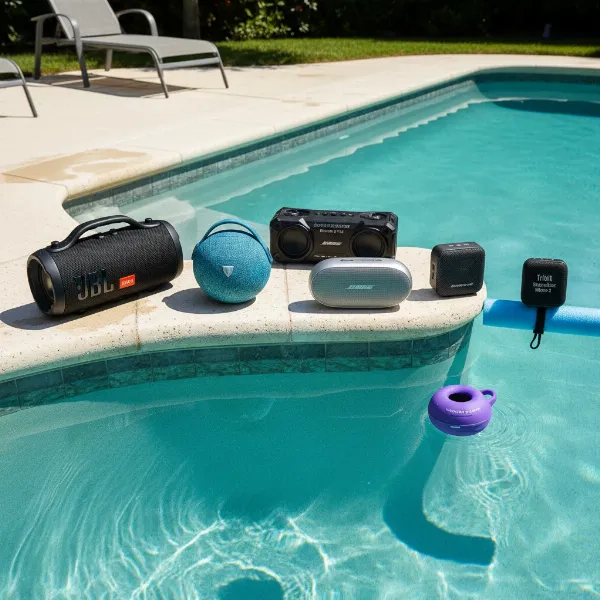 A diverse selection of popular floating Bluetooth speakers from various brands, highlighting key features.
Top Picks for Floating Bluetooth Speakers by Price Segment
Finding the perfect floating speaker often comes down to balancing features with your budget.
Budget-Friendly (Under $100)
For those who want to enjoy music by the water without breaking the bank, several excellent options provide great value.
- Top Choices: Ultimate Ears Wonderboom 4 offers surprisingly robust 360-degree sound in a compact, floating design with a solid IP67 rating and a good 14-hour battery life. The Tribit Stormbox Micro 2 is another highly portable option, offering impressive sound for its tiny size, IP67 waterproofing, and the ability to float, often coming in at a very attractive price point.
- Pros: Accessible price, excellent portability, reliable waterproofing for splashes and quick dips.
- Cons: Limited bass depth, lower maximum volume, sometimes fewer advanced features.
Mid-Range ($100-$250)
This segment strikes a great balance between performance and affordability, often introducing richer sound and more features.
- Top Choices: The Anker Soundcore Boom 2 Plus stands out with its powerful bass, strong volume, and dynamic LED lights, all within an IPX7 floating design. The JBL Flip 7 (or older Charge 5/6 models) provides punchy, detailed sound, good battery life, and JBL’s signature durable build with IP68 waterproofing, making it a reliable floating companion.
- Pros: Noticeably improved sound quality, better bass response, longer battery life, multi-speaker pairing options.
- Cons: Larger and heavier than budget options, may lack some premium features found in higher-end models.
Premium (Over $250)
If uncompromising audio quality, maximum durability, and advanced features are your priority, the premium segment delivers.
- Top Choices: The JBL Boombox 4 is a powerhouse, offering immense volume, deep bass, and an outstanding 40+ hours of battery life, all in a rugged, floating IP68 package. The Bose SoundLink Max combines Bose’s renowned audio expertise with a durable, floating design, providing a premium listening experience with rich, balanced sound. The Ultimate Ears Epicboom is another strong contender, known for its loud, bassy output and robust, floatable build.
- Pros: Best-in-class sound quality, loudest volumes, longest battery life, most advanced features (app control, EQ, multi-speaker linking), ultimate durability.
- Cons: Significant investment, larger and heavier, less portable for some users.
Tips for Using and Maintaining Your Floating Bluetooth Speaker
To ensure your floating Bluetooth speaker delivers the best experience and lasts for many pool seasons, proper usage and maintenance are key.
How to Connect Your Floating Bluetooth Speaker to Devices
Connecting your speaker is usually straightforward:
- Power On: Turn on your speaker and ensure it’s in Bluetooth pairing mode (often indicated by a flashing LED).
- Enable Bluetooth: On your smartphone, tablet, or other device, go to your Bluetooth settings and ensure Bluetooth is enabled.
- Select Speaker: Look for your speaker’s name in the list of available devices and tap to connect. A confirmation sound or solid LED usually indicates successful pairing.
- Placement: While many speakers float, it’s generally best to place the speaker gently into the water rather than tossing it, to prevent any shock or accidental damage to internal components.
How to Optimize Sound Quality
- Placement: For optimal sound dispersion, especially with 360-degree speakers, aim for a central location in the pool or open water.
- Water Level: Ensure the speaker is floating freely and not partially submerged or obstructed, which can muffle sound.
- EQ Settings: If your speaker has an accompanying app, use its equalizer (EQ) settings to fine-tune the sound to your preference, boosting bass for parties or adjusting treble for vocal clarity.
- Multi-Speaker Pairing: For a truly immersive experience, link two compatible speakers for stereo sound, or multiple speakers for a wider party soundstage.
How to Clean and Maintain Your Floating Bluetooth Speaker
Regular care will extend the life of your speaker:
- Rinse After Use: After every use in chlorinated pool water, saltwater, or even just dirty water, rinse the speaker thoroughly with clean, fresh water.
- Dry Completely: Before charging or storing, ensure all ports and the entire speaker are completely dry. Water in charging ports can cause damage.
- Store Properly: Store your speaker in a cool, dry place away from direct sunlight when not in use.
- Charge Regularly: For speakers with rechargeable lithium-ion batteries, it’s good practice to charge them fully after use and avoid completely draining the battery frequently to prolong its lifespan.
Conclusion
Floating Bluetooth speakers have transformed how we enjoy music by the water, blending robust waterproofing with impressive sound performance. From compact, portable companions perfect for a relaxing float to high-wattage powerhouses designed for the liveliest pool parties, there’s a floating speaker tailored to every need and budget. When making your choice, prioritize essential features like a high IP rating (IPX7, IP67, or IP68), stable floatation, and clear, powerful sound. Brands like JBL, Ultimate Ears, Anker Soundcore, and Bose consistently deliver reliable and high-quality options across various price points. By following our expert buying guide and maintenance tips, you’re not just buying a speaker; you’re investing in countless memorable pool days filled with your favorite soundtracks. So, what tunes will be the soundtrack to your next unforgettable pool day?
Frequently Asked Questions
What does IPX7 waterproof mean for a floating speaker?
An IPX7 rating means the speaker can be fully submerged in water up to 1 meter (3 feet) deep for a duration of 30 minutes without incurring any damage. This makes it ideal for accidental drops in the pool or for floating directly on the water’s surface.
Can I use my floating Bluetooth speaker in saltwater or chlorinated pools?
Most floating Bluetooth speakers with high IP ratings (IPX7, IP67, IP68) can withstand exposure to saltwater and chlorinated water. However, it’s highly recommended to rinse your speaker thoroughly with fresh water after each use in such environments to prevent material degradation and extend its lifespan.
How do floating speakers stay upright in the water?
Floating speakers are designed with internal weighting and buoyant materials that allow them to naturally orient themselves with the speaker drivers facing upwards or outwards when placed in water. This ensures optimal sound projection and a stable floating experience.
What is the typical battery life for a good floating Bluetooth speaker?
Battery life varies significantly by model and volume level, but a good floating Bluetooth speaker typically offers anywhere from 10 to 24 hours of playtime on a single charge. Premium models can even extend this to 40 hours or more for prolonged use.
Can I pair multiple floating Bluetooth speakers for louder sound?
Yes, many modern floating Bluetooth Speakers feature True Wireless Stereo (TWS) or similar proprietary technologies (like JBL PartyBoost or UE PartyUp) that allow you to wirelessly connect two or more compatible speakers. This creates a more immersive stereo sound experience or simply amplifies the audio for larger gatherings.
Do floating speakers have a good sound range when in water?
The sound quality and range of floating speakers are generally designed to project well in open-air and watery environments. While water can absorb sound, features like 360-degree audio and enhanced bass response are common to ensure clear and powerful sound coverage across your pool area.
Is an IP67 rating better than an IPX7 rating for a floating speaker?
Yes, an IP67 rating is generally considered better than IPX7 for an outdoor speaker because the ‘6’ indicates complete protection against dust ingress, in addition to the same level of waterproofing as IPX7 (submersion up to 1 meter for 30 minutes). This makes IP67 speakers more versatile for both pool and beach environments.