Are you searching for the perfect blend of powerful, room-filling sound and modern wireless convenience? Bookshelf speakers with Bluetooth connectivity offer an ideal solution, transforming your listening experience whether you’re streaming from a smartphone or enjoying your favorite vinyl. Choosing the right pair, however, can be overwhelming with the myriad of options available. This comprehensive guide will navigate the exciting world of Bluetooth-enabled bookshelf speakers, helping you find the perfect match for your home, your ears, and your budget.
Types of Bookshelf Speakers with Bluetooth
Bookshelf speakers come in various forms, each offering distinct advantages. Understanding these categories is the first step toward making an informed decision.
Active (Powered) Bluetooth Bookshelf Speakers
Active bookshelf speakers are the epitome of convenience, as they feature built-in amplifiers. This means you don’t need a separate receiver or amplifier, simplifying your setup significantly. Just plug them into a power outlet, connect them to each other (usually with a single cable), and pair your Bluetooth device. They are perfect for minimalist setups, small apartments, or anyone looking for an all-in-one audio solution. Many modern active speakers also include multiple wired inputs, expanding their versatility beyond just Bluetooth.
- Pros: Simplified setup, fewer cables, often include multiple inputs (RCA, optical, USB), can be more compact.
- Cons: Less upgradeability (amplifier is fixed), if one component fails, the entire unit may need servicing.
- Key Features to Consider: Look for models with digital signal processing (DSP) for optimized sound, a range of input options (HDMI ARC for TV connectivity is a bonus), and remote control functionality.
- Examples of Top Models: Edifier R1700BT, Klipsch R-51PM, Audioengine A5+ Plus Wireless, Kanto YU4. These models are frequently praised for their balance of features and sound quality, making them excellent choices for many users.
|
Our Picks for the Best Bluetooth speaker in 2026
As an Amazon Associate I earn from qualifying purchases.
|
||
| Num | Product | Action |
|---|---|---|
| 1 | Bluetooth Speaker with HD Sound, Portable Wireless, IPX5 Waterproof, Up to 20H Playtime, TWS Pairing, BT5.3, for Home/Party/Outdoor/Beach, Electronic Gadgets, Birthday Gift (Black) |

|
| 2 | Bluetooth Speaker with HD Sound, Portable Wireless, IPX5 Waterproof, Up to 20H Playtime, TWS Pairing, BT5.3, for Home/Party/Outdoor/Beach, Electronic Gadgets, Birthday Gift (Blue) |
|
| 3 | Anker Soundcore 2 Portable Bluetooth Speaker with Stereo Sound, Bluetooth 5, Bassup, IPX7 Waterproof, 24-Hour Playtime, Wireless, Speaker for Home, Outdoors, Travel |
|
| 4 | Bluetooth Speaker with HD Sound, Portable Wireless, IPX5 Waterproof, Up to 20H Playtime, TWS Pairing, BT5.3, for Home/Party/Outdoor/Beach, Electronic Gadgets, Birthday Gift (Pink) |
|
| 5 | Bluetooth Speaker with HD Sound, Portable Wireless, IPX5 Waterproof, Up to 20H Playtime, TWS Pairing, BT5.3, for Home/Party/Outdoor/Beach, Electronic Gadgets, Birthday Gift (Red) |
|
| 6 | Anker Soundcore 2 Portable Bluetooth Speaker with Stereo Sound, Bluetooth 5, Bassup, IPX7 Waterproof, 24-Hour Playtime, Wireless, Speaker for Home, Outdoors, Travel |
|
| 7 | Anker Soundcore 2 Portable Bluetooth Speaker with Stereo Sound, Bluetooth 5, Bassup, IPX7 Waterproof, 24-Hour Playtime, Wireless, Speaker for Home, Outdoors, Travel- Navy Blue |
|
| 8 | Bluetooth Speaker with HD Sound, Portable Wireless, IPX5 Waterproof, Up to 20H Playtime, TWS Pairing, BT5.3, for Home/Party/Outdoor/Beach, Electronic Gadgets, Birthday Gift (Teal) |
|
| 9 | Soundcore Anker 2 Portable Bluetooth Speaker with Stereo Sound, Bluetooth 5, Bassup, IPX7 Waterproof, 24-Hour Playtime, Wireless, Speaker for Home, Outdoors, Travel |
|
| 10 | Anker Soundcore 2 Portable Bluetooth Speaker with Stereo Sound, Bluetooth 5, Bassup, IPX7 Waterproof, 24-Hour Playtime, Wireless, Speaker for Home, Outdoors, Travel |
|
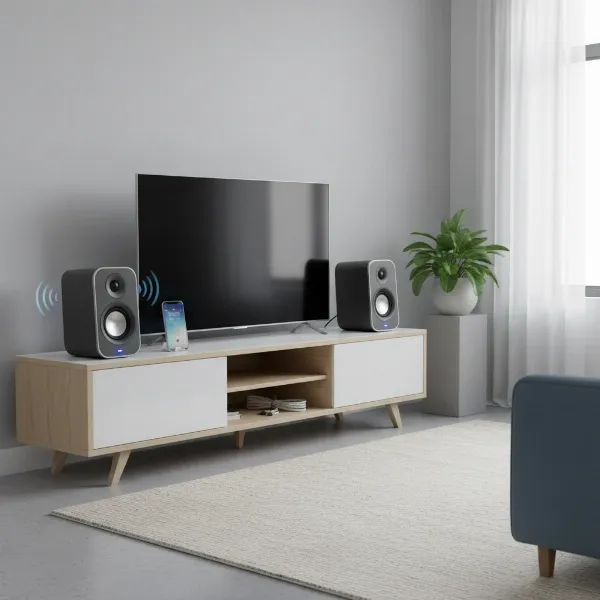 Minimalist active Bluetooth bookshelf speaker setup with smartphone streaming audio
Passive Bookshelf Speakers with Bluetooth Adapters (or Integrated Pre-amp)
Passive bookshelf speakers require an external amplifier or receiver to power them. While this might seem less convenient, it offers immense flexibility for audiophiles. You can mix and match components, upgrade your amplifier independently, and tailor your sound system with greater precision. To add Bluetooth functionality to passive speakers, you would typically connect a Bluetooth receiver to your amplifier, or use an amplifier that has Bluetooth built-in.
- Pros: Superior sound quality potential (with quality components), highly customizable and upgradeable, ideal for building a dedicated hi-fi system.
- Cons: More complex setup, requires additional components (amplifier/receiver, Bluetooth adapter), more cables.
- Key Features to Consider: Focus on impedance (ohms), sensitivity (dB), and power handling (watts per channel) to ensure compatibility with your chosen amplifier. Speaker stands are often recommended for optimal sound.
- Examples of Top Models (requiring external amplification): Polk Audio T15, ELAC Debut 2.0 B6.2, Q Acoustics 3020i. While these don’t inherently have Bluetooth, they represent excellent passive options that can be made wireless with an appropriate receiver.
Buying Guide: How to Choose Your Perfect Bluetooth Bookshelf Speakers
Selecting the ideal Bluetooth bookshelf speakers involves considering several critical factors beyond just brand recognition.
Determine Your Usage Needs and Environment
Your primary use case and listening environment should heavily influence your choice.
- Main Purpose: Are you primarily listening to music, watching movies, gaming, or a combination? Speakers designed for home theater might prioritize bass, while those for critical music listening focus on clarity and neutrality.
- Room Size: For smaller rooms like bedrooms or home offices, compact speakers with 4-5 inch woofers can suffice. Larger living spaces might benefit from speakers with larger drivers (6.5 inches or more) or those that offer a subwoofer output for enhanced low-end performance. Overly powerful speakers in small rooms can lead to boomy, indistinct sound.
- Budget: Bookshelf speakers with Bluetooth range from under $100 to well over $1,000. Establish a realistic budget, remembering that investing in quality often translates to better longevity and listening satisfaction.
Essential Factors to Evaluate
- Sound Quality: This is paramount. Look for balanced sound reproduction with clear highs, detailed mid-ranges, and tight, controlled bass. Don’t be fooled by exaggerated bass; true quality lies in clarity and separation of instruments. Many reviews highlight a speaker’s “soundstage” (the perceived width and depth of the sound) and “neutrality” (how faithfully it reproduces the audio).
- Connectivity Options: While Bluetooth is a must for this category, look for the latest Bluetooth version (5.0 or higher) for better range and stability. Critically, seek support for high-quality audio codecs like aptX, aptX HD, or AAC. These codecs transmit audio with less compression than the standard SBC codec, resulting in a significantly better wireless listening experience, closer to wired fidelity. Also, consider wired inputs such as:
- RCA: For connecting traditional audio sources like CD players or turntables.
- Optical (Toslink): Common for TVs and digital audio devices.
- USB: For direct digital connection to computers, often bypassing the computer’s internal DAC for improved sound.
- 3.5mm AUX: For universal analog connections to phones or portable players.
- HDMI ARC: A convenient feature for direct, high-quality audio connection to modern TVs, allowing the TV remote to control speaker volume.
- Power and Amplification (for Active Speakers): Higher wattage generally means more headroom and the ability to play louder without distortion. However, efficiency (sensitivity) also plays a role. Look for a minimum of 50 watts per channel for a robust listening experience in most home settings.
- Physical Size and Aesthetics: Bookshelf speakers get their name from their ability to fit on a shelf, but dedicated speaker stands often provide the best acoustic performance. Consider the dimensions and weight, as well as the design and finish, to ensure they complement your living space.
- Additional Features:
- Remote Control: A highly convenient feature for adjusting volume, inputs, and sometimes EQ settings from afar.
- EQ Adjustments: Some speakers offer physical knobs for bass and treble, or app-based equalization for fine-tuning the sound to your preference or room acoustics.
- Subwoofer Output: A dedicated output for connecting an external subwoofer, crucial if you want truly deep, impactful bass, especially for movies or bass-heavy music genres.
- Multi-room Audio: Integration with ecosystems like Sonos or Apple AirPlay 2 for synchronized audio across multiple rooms.
- Voice Assistants: Built-in Alexa or Google Assistant for smart home control and hands-free operation.
Comparing Popular Brands
- JBL: Known for robust, lively sound and often featuring enhanced bass, JBL offers options that deliver powerful audio suitable for various genres.
- Sony: Sony speakers typically provide a balanced sound profile, often with features like extra bass modes and good connectivity, catering to a wide audience.
- Bose: Bose specializes in compact, aesthetically pleasing designs that deliver surprisingly expansive sound for their size, often with user-friendly features.
- Anker (Soundcore): Anker, through its Soundcore brand, focuses on offering excellent value, with reliable Bluetooth connectivity, good battery life (for portable models, though some bookshelf options exist), and satisfying sound at budget-friendly prices.
- Edifier: A dominant player in the powered bookshelf speaker market, Edifier consistently delivers impressive sound quality, versatile inputs, and appealing designs across various price points. Models like the R1280T and S1000DB are frequently recommended.
- Klipsch: Renowned for their “horn-loaded” tweeters, Klipsch speakers offer dynamic, detailed, and energetic sound, with models like the R-51PM often topping review lists for overall performance.
- Audioengine: Celebrated for their clear, accurate sound and stylish, compact designs, Audioengine speakers (e.g., A5+ Plus, HD3, HD4) are a favorite for desktop setups and smaller rooms, often featuring high-quality DACs and aptX Bluetooth.
- Kanto: Kanto offers a range of active speakers with strong connectivity options, a clean aesthetic, and engaging sound, making them popular choices for modern listeners.
Bluetooth Bookshelf Speaker Comparison Table
| Brand | Model | Price Range | Key Strengths | Potential Drawbacks |
|---|---|---|---|---|
| Klipsch | R-51PM | Mid-High | Excellent sound, versatile inputs, sleek design | No manual EQ, higher price |
| Edifier | R1700BT | Budget-Mid | Great value, balanced sound, EQ knobs | Less powerful bass than larger speakers |
| Audioengine | A5+ Plus Wireless | Mid-High | Powerful bass, versatile inputs, easy to use | Sound can be boomy, no EQ adjustment |
| Kanto | YU4 | Mid | Clear audio, compact, stylish, aptX Bluetooth | Less impactful bass than larger units |
| Fluance | Ai61 | Mid | Engaging sound, wide input range, Bluetooth 5.0 | Annoying interface, narrower soundstage |
| Sonos | One SL (or Era 100/300) | Mid-High | Great sound for size, smart features, multi-room | App-dependent, digital-only, higher price |
Top Picks for Bluetooth Bookshelf Speakers by Price Segment
Finding exceptional sound doesn’t always require a hefty investment. Here’s a breakdown of top contenders across different budget categories.
Budget-Friendly (Under $150)
For those just starting their audio journey or needing a secondary setup, impressive options exist without breaking the bank. These speakers prioritize essential features and solid sound.
- Best Choices:
- Edifier R1280T: Often hailed as the best budget choice, offering decent sound quality, robust build, and multiple inputs including Bluetooth. Its balanced sound is perfect for small to medium rooms.
- Sanyun SW208 (or similar entry-level active speakers): Provides a surprising amount of clarity and features for its price, often including Bluetooth 5.0 and basic connectivity.
- Pros: Highly affordable, good entry point into quality audio, easy to set up.
- Cons: Limited bass extension, less refined soundstage, fewer advanced features.
Mid-Range (Between $150 and $500)
This segment offers a sweet spot between price and performance, providing significant upgrades in sound quality and features.
- Best Choices:
- Edifier R1700BT: A step up from the R1280T, delivering a more refined and powerful sound with excellent clarity and adjustable EQ, making it a “best bang for the buck” option.
- Klipsch R-41PM / R-51PM: Known for their dynamic sound and versatile connectivity, including phono preamps for turntables, offering a vibrant listening experience. The R-51PM provides more power and detail.
- Audioengine HD3 / Fluance Ai40/Ai61: These offer clear, detailed sound with good connectivity, often including aptX Bluetooth for higher fidelity streaming. The Ai61 is particularly noted for its engaging sound and wide range of inputs.
- Kanto YU4: Delivers a clean, neutral sound with a compact design, a phono preamp, and aptX Bluetooth, ideal for various listening needs.
- Pros: Significantly improved sound quality, more robust connectivity options (including better Bluetooth codecs), often more attractive designs, better bass response.
- Cons: Can still lack the deep bass or expansive soundstage of higher-end models, some premium features may be absent.
High-End (Over $500)
For audiophiles and those seeking uncompromising sound quality, this category features speakers with premium components, advanced technology, and exceptional acoustic performance.
- Best Choices:
- Klipsch The Fives: Offer a blend of stunning design, versatile inputs including HDMI ARC for TV integration, and powerful, dynamic sound, though some find the bass a bit uncontrolled.
- Audioengine A5+ Plus Wireless: Known for its commanding presence and robust sound, delivering plenty of bass and a wide soundstage, making it great for larger rooms.
- KEF LSX II / LS50 Wireless II (or passive LS50 Meta with separate amplifier): These represent the pinnacle of bookshelf speaker technology, offering incredibly detailed, precise, and immersive sound, often with advanced streaming capabilities and multi-room functionality.
- Kanto TUK: Features Air Motion Transformer tweeters for extraordinary detail and a comprehensive set of inputs, offering a truly high-fidelity experience.
- Pros: Exceptional sound clarity, powerful and accurate bass, advanced connectivity, premium build materials, often integrate smart home features.
- Cons: Substantial investment, larger footprint, some models may require careful placement for optimal sound.
Tips for Using and Maintaining Your Bluetooth Bookshelf Speakers
To get the most out of your investment, proper setup and care are essential.
How to Connect Bluetooth Bookshelf Speakers
- Power On: Ensure both speakers (if active) are plugged into power outlets and turned on. For passive speakers, ensure your amplifier is connected and powered.
- Pairing Mode: Activate Bluetooth pairing mode on your primary speaker. This usually involves pressing a dedicated Bluetooth button or holding the input selection button until an indicator light flashes.
- Device Connection: On your smartphone, tablet, or computer, go to Bluetooth settings and select your speakers from the list of available devices. Once paired, the indicator light will usually become solid.
- Wired Connections: For non-Bluetooth sources, connect cables (RCA, optical, USB, 3.5mm AUX, HDMI ARC) to the appropriate inputs on your speakers or amplifier. Select the correct input source on the speakers using the remote or physical controls.
Optimizing Sound Quality
- Placement is Key: For optimal stereo imaging, place speakers at ear level, forming an equilateral triangle with your primary listening position. Keep them at least a few inches from walls (especially if rear-ported) to prevent muddy bass. Experiment with toe-in (angling speakers slightly inward) to refine the soundstage.
- Room Acoustics: Hard surfaces can reflect sound, leading to harshness. Soft furnishings, carpets, and curtains can help absorb reflections and create a more balanced sound.
- High-Quality Audio Sources: Stream music from services that offer higher bitrates (e.g., Spotify Premium, Apple Music, Tidal, Qobuz) or play lossless files. If using Bluetooth, ensure your speakers and device support aptX or AAC codecs.
- Consider a Subwoofer: If your speakers lack deep bass, adding a dedicated subwoofer can dramatically improve your listening experience, especially for movies and certain music genres.
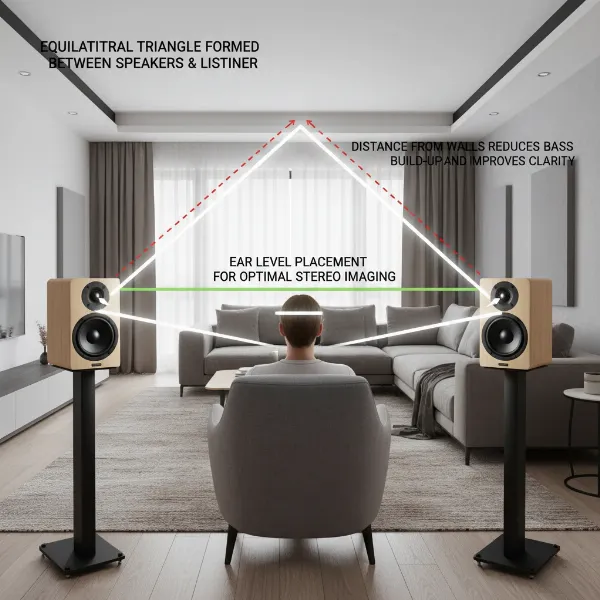 Diagram showing optimal bookshelf speaker placement in a room, forming an equilateral triangle.
Cleaning and Maintenance
- Gentle Cleaning: Dust your speakers regularly with a soft, dry microfiber cloth. For stubborn grime, lightly dampen the cloth with water – never spray cleaning solutions directly onto the speakers.
- Protect Drivers: Avoid touching speaker drivers (woofers, tweeters) directly, as this can damage them. Keep grilles on if accidental contact is a concern.
- Avoid Overpowering: If you notice distortion, reduce the volume. Pushing speakers beyond their limits can cause permanent damage.
- Environmental Factors: Keep speakers away from direct sunlight, extreme temperatures, and high humidity, which can degrade components over time.
Conclusion
Choosing the Best Bookshelf Speakers With Bluetooth Connectivity means balancing superb audio performance with the modern convenience of wireless streaming. From budget-friendly workhorses to high-fidelity audiophile systems, the market offers a diverse range of options to suit every need and preference. By prioritizing sound quality, understanding connectivity options like aptX and AAC, and considering your unique listening environment, you can confidently select a pair that will deliver years of rich, immersive sound. So, take the plunge, explore the possibilities, and rediscover your favorite music with exceptional clarity and depth.
What will be the first track you play on your new Bluetooth bookshelf speakers?
Frequently Asked Questions
What is the difference between active and passive bookshelf speakers?
Active bookshelf speakers have built-in amplifiers, requiring only a power outlet and a connection to your audio source. Passive speakers, on the other hand, require an external amplifier or receiver to produce sound, offering more flexibility for component matching and upgrades.
Why should I choose Bluetooth bookshelf speakers over a portable Bluetooth speaker?
Bookshelf speakers are designed for static, high-fidelity audio in a room, offering superior sound quality, deeper bass, and a wider soundstage compared to most portable Bluetooth Speakers. They provide a true stereo experience, ideal for home listening.
What are aptX and AAC codecs, and why are they important for Bluetooth speakers?
aptX and AAC are advanced Bluetooth audio codecs that allow for higher-quality audio transmission compared to the standard SBC codec. They compress audio more efficiently, preserving more detail and reducing latency, resulting in a sound closer to wired connections.
Can I connect a turntable to Bluetooth bookshelf speakers?
Yes, many active Bluetooth bookshelf speakers include a phono input (often switchable between phono and line) for direct connection to a turntable. If your speakers don’t have a phono input, you might need a turntable with a built-in preamp or a separate external phono preamp to connect to a line-level input.
How important is speaker placement for sound quality?
Speaker placement is crucial. Proper positioning, typically with speakers forming an equilateral triangle with your listening spot and tweeters at ear level, significantly enhances stereo imaging, clarity, and bass response. Experimentation is key to finding the “sweet spot” in your room.